Specific laptops available now
Compare exact condition, listed configuration, seller feedback and current price.
Browse current laptop listings →Compare laptop specifications, current value, condition, seller reputation and returns on active marketplace listings before you buy. Our laptop guides pair expert analysis with live pricing.
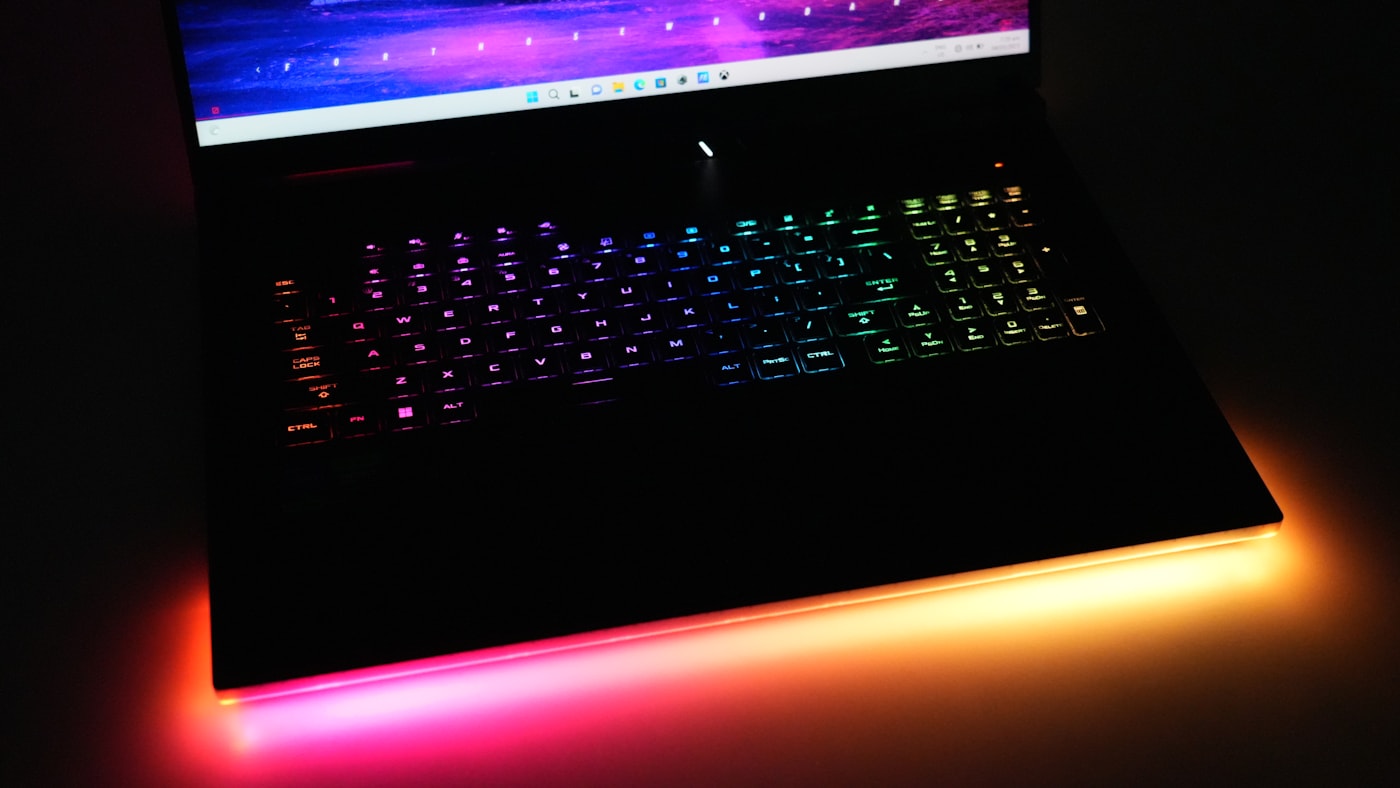
Compare the final specification, warranty and total price. eBay is strongest for fixed and refurbished value; Origin PC is relevant when higher-end component choice matters.
Compare exact condition, listed configuration, seller feedback and current price.
Browse current laptop listings →Compare manufacturer-direct gaming laptop families with configurable performance and storage.
Open the Origin PC guide →Selected premium laptop systems from the current Origin PC CJ catalogue. Displayed amounts may be starting prices.
Loading current Origin PC configurations… · Feed updatedChecking current Origin PC laptop configurations.
Affiliate disclosure: GameRigAdvisor may earn commissions from qualifying eBay and Origin PC purchases.
Qualified laptops with current specifications, seller checks and an on-site review note beside each listing.
Listing imagery refreshes continuouslyShowing Gaming laptops — 0 listings
Open full marketplaceMatch a laptop to your budget with current configuration and value guidance.
Budget gaming laptops that deliver real 1080p gaming performance without breaking the bank.
$1,000 - $1,500Mid-range gaming laptops with RTX graphics and high-refresh displays for serious gaming.
$1,500 - $2,000High-performance gaming laptops capable of excellent 1440p gaming and strong longevity.
Over $2,000Premium gaming laptops with top-tier GPUs, high-resolution displays, and premium build quality.
Side-by-side analysis of the laptop lines buyers compare most.
Platform-level guidance for choosing and buying a gaming laptop.
Not sure which platform is right for you? We break down the pros and cons of each.
GPU GuidePerformance benchmarks, ray tracing, VRAM, and which one to buy for your next laptop.
DealsFind the best current prices on gaming laptops across major retailers.
Each listing is checked against configuration, seller history, condition and price context before it appears in the shortlist above.
Collect active laptops for defined models and buyer needs.
Check seller history, condition, returns and core details.
Judge price in the context of configuration and protection.
Show why the listing stands out and what it compromises.
Prioritize GPU first, then RAM (16GB minimum), display quality (1080p or higher, 120Hz+ refresh rate), and storage (512GB SSD minimum, 1TB recommended). CPU matters less for gaming than GPU at most price points.
Entry-level gaming laptops start around $700-800. The sweet spot for most buyers is $1,000-1,500, where you get RTX-class graphics, good displays, and solid build quality. Premium laptops over $2,000 offer diminishing returns.
Lenovo Legion is widely considered the best overall brand for its balance of performance, build quality, and value. ASUS ROG offers premium displays and higher performance. ASUS TUF provides excellent value for the price.
3-5 years for gaming performance, longer for general use. A well-maintained gaming laptop can last 5-7 years as a general-purpose computer. Battery degradation is usually the first issue to appear.
If you play modern 3D games, a gaming laptop with a dedicated GPU is necessary. If you play only casual or older games, a regular laptop with integrated graphics may suffice. Gaming laptops are heavier with shorter battery life.
GPU> RAM> Display> Storage> CPU. The graphics card has the largest impact on gaming performance. Ensure 16GB RAM, a high-refresh display, and fast SSD storage. Modern CPUs at any price point are sufficient for gaming.
Choose a laptop if you need portability for school, work, or travel. Choose a desktop if you game primarily at home and want maximum performance, upgradeability, and value. Many gamers opt for both.
Prime Day, Black Friday, Cyber Monday, and back-to-school sales offer the best discounts. New GPU announcements also trigger price drops on existing models. Monitor prices for 2-4 weeks before buying.
Yes, but with trade-offs. Gaming laptops work well for browsing, streaming, and productivity, but they are heavier, louder, and have shorter battery life than ultrabooks. Many modern designs suit professional settings.
Yes, any gaming laptop with an RTX 4060 or better GPU can run most VR headsets and experiences. Check the specific laptop GPU, display outputs (HDMI 2.1 or DisplayPort over USB-C), and VR headset compatibility.
15.6 inches is the most common and offers a good balance of screen real estate and portability. 16-inch displays are becoming popular with 16:10 aspect ratios. 17-inch offers immersion but is heavy. 14-inch is best for portability.
Yes, especially for fast-paced games. 120Hz is a noticeable upgrade from 60Hz. 144Hz and 165Hz provide even smoother motion. Above 240Hz, benefits diminish for most users. Higher refresh rates matter most for competitive gaming.
About the GameRigAdvisor Editorial Team: This article was prepared by the GameRigAdvisor Editorial Team. Our product selections and recommendations are based on comprehensive analysis of verified user reviews across major retail platforms, manufacturer-provided specifications and documentation, expert consensus from reputable technology publications, and publicly available benchmark and pricing data. GameRigAdvisor does not physically test every product mentioned unless explicitly stated. We prioritize transparency and aim to provide accurate, unbiased information to help our readers make informed purchasing decisions. Product prices, configurations, and availability are subject to change. As an eBay Partner Network affiliate, GameRigAdvisor may earn from qualifying purchases through links made on this page.